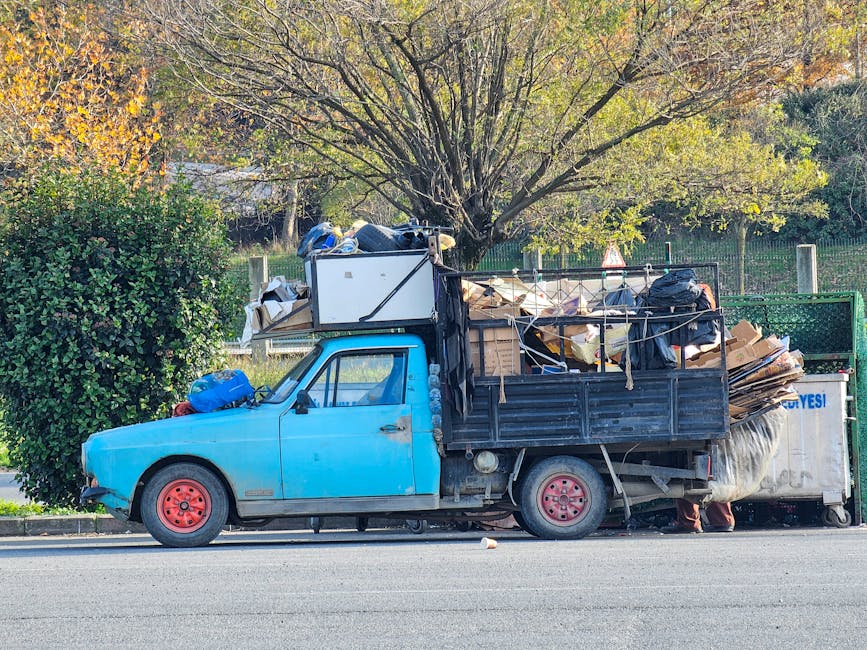
South East London rubbish collection for SE13 residents: a practical guide for Lewisham locals
If you live in SE13, rubbish has a way of becoming urgent at the least convenient moment. One day it is a broken wardrobe by the hallway, the next it is garden cuttings, box after box from a flat move, or a builder's mess that has quietly taken over the spare room. South East London rubbish collection for SE13 residents is really about getting that clutter moved quickly, legally, and without turning your week upside down. This guide explains how it works, what to expect, how to choose the right collection method, and the little details that make the whole thing smoother.
Lewisham, Hither Green, Ladywell edges, Brockley nearby - SE13 is busy, lived-in, and not always generous with parking or storage space. That matters. So let's look at the practical side properly.
Table of Contents
- Why South East London rubbish collection for SE13 residents Matters
- How South East London rubbish collection for SE13 residents Works
- Key Benefits and Practical Advantages
- Who This Is For and When It Makes Sense
- Step-by-Step Guidance
- Expert Tips for Better Results
- Common Mistakes to Avoid
- Tools, Resources and Recommendations
- Law, Compliance, Standards, or Best Practice
- Options, Methods, or Comparison Table
- Case Study or Real-World Example
- Practical Checklist
- Conclusion
- Frequently Asked Questions
Why South East London rubbish collection for SE13 residents Matters
At first glance, rubbish collection sounds simple. Put waste out, have it taken away, job done. In SE13, though, it is rarely that neat. Flats often have limited bin storage, shared hallways, and awkward access. Terraced homes may have narrow side returns. Some streets are easy enough in daylight and a pain by late afternoon, especially when everyone is home and cars are parked nose to tail.
That is why a reliable collection service matters. It is not just about convenience. It is about keeping your home usable, reducing fire risk from stacked waste, avoiding unsightly fly-tipping, and making sure rubbish goes to the right place. If you have ever tried shifting a cracked sofa down two flights of stairs on your own, you will know the difference between theory and real life. Truth be told, one bin bag is manageable; ten bin bags, a wardrobe, and a broken desk usually are not.
There is also a social side to it. Clean communal spaces make life feel calmer. You notice it in the small things - the smell of old cardboard in a hallway, the relief of seeing a clear landing again, the sound of a trolley rolling out rather than a heap of bags sitting there all weekend. Little wins, but they matter.
If you are comparing broader options across the area, the general rubbish collection service and South East London coverage are useful starting points for understanding what is available beyond a single one-off collection.
How South East London rubbish collection for SE13 residents Works
Most rubbish collection services work in a straightforward sequence: you describe what needs removing, the provider assesses the load, a suitable collection time is arranged, and the waste is taken away by a crew with the right vehicle and handling equipment. Simple on paper, yes. But the details make the difference.
What usually happens on the day
- The team arrives within the agreed window.
- They check access, parking, and the items to be removed.
- If needed, they separate recyclable materials from mixed waste.
- Heavy or awkward items are carried out carefully, usually with two people for bulky loads.
- The waste is loaded, swept up if required, and then transported for disposal or processing.
For SE13 homes, access is often the big variable. A ground-floor flat with a nearby parking space is one thing; a top-floor conversion with no lift is another. If you mention stair counts, narrow doors, or restricted parking in advance, the collection is usually smoother and less stressful. Nobody enjoys a surprise halfway through a job, least of all the people carrying the heavy stuff.
Different waste types may be handled in different ways. General household rubbish is one thing; wood, metal, white goods, green waste, and mixed renovation debris can all require separate sorting. That is where using a broader waste removal service or a more specific service such as builders waste removal can make practical sense.
If your load is mostly household clutter, you may only need rubbish clearance. If it includes old furniture, the better fit may be furniture disposal. Matching the service to the waste is usually where the value is.
Key Benefits and Practical Advantages
People book rubbish collection for different reasons, but the same core benefits come up again and again.
1. It saves time and physical effort
Dragging heavy items through a flat, down stairs, and out to the kerb can take longer than people expect. Add in loading, sorting, and disposal, and suddenly you have lost half a day. A collection team can compress that into a short visit. Nice, really.
2. It reduces stress during busy life events
Moving house, having a baby, finishing a renovation, clearing a deceased relative's property, or making space for a new tenant - these are already emotional moments. A smooth collection takes one task off your plate. That alone is worth quite a lot.
3. It helps keep shared spaces tidy
In apartment buildings around SE13, communal hallways and bin stores can become clutter magnets. Timely collection helps prevent blocked exits, messy entrances, and the sort of build-up that irritates everyone in the building.
4. It supports better sorting and disposal
Good waste handling is not just "take it away". It is also about ensuring items are handled in a sensible way. Reusable furniture, scrap metal, cardboard, and garden waste may all be treated differently. Services like waste collection and waste disposal are often chosen because they give that extra bit of structure.
5. It can be more efficient than multiple trips to a tip
If you do not have a van, or if your schedule is packed, the cost of multiple journeys adds up quickly. Fuel, parking, loading, unloading, and your own time all matter. One collection is often the tidier option.
Expert summary: For most SE13 residents, the best rubbish collection choice is the one that matches the waste type, access conditions, and urgency - not just the cheapest headline price.
Who This Is For and When It Makes Sense
South East London rubbish collection for SE13 residents is useful in more situations than people first think. It is not just for major clearances or renovation jobs.
- Flat dwellers who need old furniture or mixed rubbish removed from upper floors.
- Homeowners clearing lofts, sheds, garages, or spare rooms.
- Landlords and letting agents turning over a property between tenants.
- Small businesses with office clutter, packaging waste, or old fixtures.
- Builders and decorators dealing with leftover rubble, timber offcuts, and packaging.
- Families after a declutter, a move, or a garden refresh.
It makes sense when the waste is too bulky for normal council bins, too much for your car, or too awkward to move safely. It also makes sense when time matters. If a hallway needs clearing before a handover tomorrow morning, waiting around is not ideal.
Sometimes people assume they need a full property clearance when they only need one or two items collected. Other times they underestimate the job and book a tiny service when really they have a full van load. A quick, honest assessment at the start saves hassle later.
Step-by-Step Guidance
Here is the simplest way to approach rubbish collection in SE13 without overcomplicating it.
- List the waste clearly. Separate furniture, bagged rubbish, garden waste, electrical items, and builder's debris if possible.
- Check access. Note stairs, lift access, parking restrictions, and any time limits on loading.
- Estimate volume. A couple of bin bags is different from a room full of clutter. Be realistic, even if it is slightly embarrassing. We have all been there.
- Choose the right service type. For mixed household clutter, waste clearance or rubbish removal may fit better than a specialist item-only service.
- Prepare the area. Move smaller loose items together, unlock gates, and make a clear route to the collection point.
- Be available for questions. A quick clarification on the day can prevent delays.
- Ask about aftercare. Sweeping up, certificate or note of removal, and disposal handling are worth confirming where relevant.
If your collection includes a sofa, armchair, or similar bulky seating, a dedicated sofa removal service can be the cleaner, easier route. It sounds obvious, but specific services usually save time.
And if the task is more about emptying a room than collecting loose rubbish, then a house clearance or flat clearance may be the better fit. Different job, different approach.
Expert Tips for Better Results
A few small decisions can make a rubbish collection feel far more efficient.
- Take photos before booking. Not for drama - just for accuracy. Images help avoid underestimating the load.
- Separate obvious categories. Wood with wood, cardboard with cardboard, bags of general waste together. It speeds things up.
- Clear the access route. Shoes, bikes, recycling boxes, and the odd umbrella stand always seem to appear at the worst time.
- Be honest about awkward items. If there is a heavy wardrobe, mention it. If there are three flights of stairs, say so.
- Plan around neighbours. In apartment blocks, a polite heads-up can avoid friction in shared entrances.
For outside jobs, weather matters more than people think. A damp Saturday afternoon changes everything. Cardboard gets soggy, garden waste gets heavier, and everyone moves a bit slower. Not catastrophic, just one of those little London realities.
If you are clearing outdoor clutter, a garden clearance page can be a useful reference point. For the other end of the house, a garage clearance is often the right match for old tools, broken storage, and forgotten bits that somehow multiply in the dark.
Common Mistakes to Avoid
Most collection problems are avoidable. The annoying part is that they are usually the same handful of mistakes.
- Guessing the volume. "It's only a little bit" often turns into a full load.
- Mixing restricted or hazardous items in with general rubbish. These need special handling and should never be hidden in a bag.
- Ignoring parking and access constraints. A large vehicle needs somewhere to stop. That is not a minor detail.
- Leaving items scattered around the property. If the crew has to hunt for everything, the job slows down.
- Booking the wrong service type. A business office clearance is not the same as a couple of bin bags after a Sunday declutter.
- Choosing purely on price. Cheap can become expensive if the service is poorly matched or incomplete.
One common SE13 scenario is a flat clear-out where half the items are furniture, a few are bagged household items, and there is a damaged mattress tucked behind a door. That is exactly the sort of mix that needs careful explanation up front. Otherwise the job can feel rushed or under-scoped. Nobody wants that awkward "oh, there's more than we thought" moment at the kerb.
Tools, Resources and Recommendations
You do not need much in the way of special equipment, but a few simple tools help.
- Strong bin bags and tape for sorting and bundling.
- Gloves for moving dusty or splintered items.
- A tape measure for checking whether furniture will fit through hallways and doors.
- Phone photos for sharing the job scope clearly.
- Labels or sticky notes if you are separating what stays and what goes.
In terms of service pages, the most useful starting points for most SE13 residents are usually rubbish removal, waste removal, and waste clearance. From there, you can drill down to more specific services if needed.
For workspace-related waste, office clearance and business waste are the more relevant choices. For renovation leftovers, the better starting point is often builders waste. Small distinction, big difference.
Law, Compliance, Standards, or Best Practice
Waste collection in the UK comes with a simple but important principle: waste should be handled responsibly and passed to the right place. As a resident, you do not need to become a compliance expert, but you should expect any service you use to operate carefully and lawfully.
Best practice usually means the following:
- waste is collected and transported safely
- items are not dumped illegally
- reusable and recyclable materials are separated where practical
- hazardous or specialist waste is treated appropriately
- communication about what can and cannot be taken is clear
If you are clearing an entire property, especially after a tenancy or house move, it is sensible to keep records of what has been removed and when. That can help if questions come up later. For most everyday jobs, though, the main thing is choosing a provider that is transparent and careful. No theatrics, just good practice.
For more detail on service terms and how the work is arranged, the pages for terms and conditions and privacy policy are the natural places to check.
Options, Methods, or Comparison Table
SE13 residents usually have a few practical options. The right one depends on the size of the load, how quickly you need it gone, and whether the waste is mixed or specialised.
| Option | Best for | Advantages | Trade-offs |
|---|---|---|---|
| Standard rubbish collection | General household waste, bags, mixed small items | Quick, simple, flexible | May not suit bulky or specialist items |
| Rubbish clearance | Mixed clutter and everyday waste | Good for one-off clear-outs | Needs accurate description of load |
| Furniture disposal | Sofas, tables, wardrobes, beds | Handles bulky items neatly | Not ideal for mixed loose waste |
| Flat clearance | Whole rooms or compact properties | Useful for major changes | Can be more involved than small collection |
| Builders waste removal | Renovation and trade debris | Designed for heavier material | Mixed household waste may need a different service |
| Garden clearance | Green waste, branches, outdoor clutter | Good seasonal option | Wet waste can be heavier than expected |
If you are still unsure, ask yourself one question: am I clearing a room, a set of items, or a pile of mixed rubbish? That usually points you in the right direction pretty quickly.
Case Study or Real-World Example
A typical SE13 job might look like this. A resident in a first-floor flat near Lewisham Green has been slowly clearing out a spare room. Over a few weeks, the space has filled with old shelving, two chairs, flat-packed boxes, a small chest of drawers, and several bags of miscellaneous household clutter. Nothing dramatic. Just one of those jobs that keeps getting postponed because the weekend disappears.
Rather than squeezing everything into a car over three separate trips, they arrange a single collection. They send photos in advance, mention narrow stairs, and flag that parking is limited for part of the street. The collection team comes prepared, moves the items carefully, and clears the room in one visit. By the end, the resident has a usable room again and no lingering pile of "I'll deal with it later" stuff. Very satisfying, to be fair.
In another example, a landlord in SE13 needs a flat cleared between tenancies. The outgoing tenant has left a mattress, a broken wardrobe, and a scatter of bags in the hallway. A focused flat clearance or broader home clearance makes more sense than a basic bag-only collection. The job is tidier, faster, and easier to hand back into the rental cycle.
Practical Checklist
Use this before booking your SE13 collection.
- Know exactly what is being removed.
- Separate furniture, waste bags, and special items.
- Check stairs, lifts, gates, and parking.
- Measure large items if they need to pass through tight spaces.
- Take a few clear photos.
- Decide whether you need rubbish collection, clearance, or disposal support.
- Confirm the collection date and arrival window.
- Make sure access is unlocked and routes are clear.
- Keep any items you want to retain in a separate room.
- Ask what happens if the load turns out to be larger than expected.
Quick takeaway: The more clearly you define the job before the team arrives, the smoother the collection will be. It sounds obvious, but it genuinely saves time and reduces friction.
Conclusion
For SE13 residents, rubbish collection is rarely just about waste. It is about making space again - in a hallway, a kitchen, a flat, a garden, or your own head. When the right service is matched to the right job, the process becomes much less stressful and a lot more efficient. That is the real goal.
Whether you are dealing with a small pile of bags, a bulky sofa, a garage full of forgotten items, or a full property clear-out, the best results come from clear communication, realistic planning, and choosing the right type of collection in the first place. Nothing fancy. Just the practical stuff done properly.
If you are ready to sort the mess, the next step is simple: choose the service that fits your load, note the access details, and get the collection arranged without delay.
Get a free quote today and see how much you can save.
Frequently Asked Questions
What counts as rubbish collection for SE13 residents?
It usually means the removal of unwanted household waste, bagged rubbish, bulky items, or mixed clutter from homes and flats in SE13. The exact scope depends on the provider and the type of waste involved.
Is rubbish collection better than taking waste to a tip myself?
For many SE13 residents, yes. If you have bulky items, no van, awkward access, or limited time, a collection can be much more practical. If you already have transport and a small amount of waste, self-disposal may still work.
How do I know whether I need rubbish removal or clearance?
Think about what you are clearing. Rubbish removal is often better for general waste and a few items, while clearance is usually better for larger mixed loads, rooms, garages, or full property clear-outs.
Can old furniture be collected from a flat in SE13?
Yes, often it can. Sofas, tables, chairs, wardrobes, and beds are common collection items. For single bulky pieces, a dedicated furniture or sofa service can be the most efficient option.
What should I tell the collection team before they arrive?
Tell them what items need removing, how much there is, whether the waste is mixed, and what the access is like. Stairs, lifts, parking restrictions, and narrow entrances are especially important in SE13 flats.
Do I need to sort everything before collection?
Not always, but some basic sorting helps. Grouping similar items together makes the job faster and can improve how the waste is handled. If you can separate furniture, bagged rubbish, and garden waste, that is a good start.
What happens if I underestimate the amount of rubbish?
It happens. The job may need to be adjusted if there is more waste than expected. That is why photos and a clear description are so useful. A quick honest check at the start is better than a surprise halfway through.
Is garden waste collected differently from household rubbish?
Often, yes. Green waste can be handled separately because it may be processed differently from general rubbish. If your SE13 job includes branches, soil, or hedge cuttings, a garden clearance service may be a better fit.
What about builder's waste after a renovation?
Builder's waste is usually best handled as a separate category, especially if it includes timber, rubble, tiles, or mixed construction debris. Dedicated builders waste collection is often the more sensible option.
How far in advance should I book a collection?
That depends on urgency and availability, but if you know the job is coming, booking ahead is usually wise. For busy weekends or moves, leaving it to the last minute can make things awkward.
Can rubbish collection help with a full house or flat clear-out?
Yes. For bigger jobs, a house clearance or flat clearance is often better than a basic one-off rubbish pickup. Those services are designed for more substantial loads and more complicated access.
What is the biggest mistake people make with rubbish collection?
The most common mistake is underestimating the volume or not mentioning access issues. In real life, a job that looks small from one angle can become much bigger once you start moving it. Happens all the time, honestly.